 Save
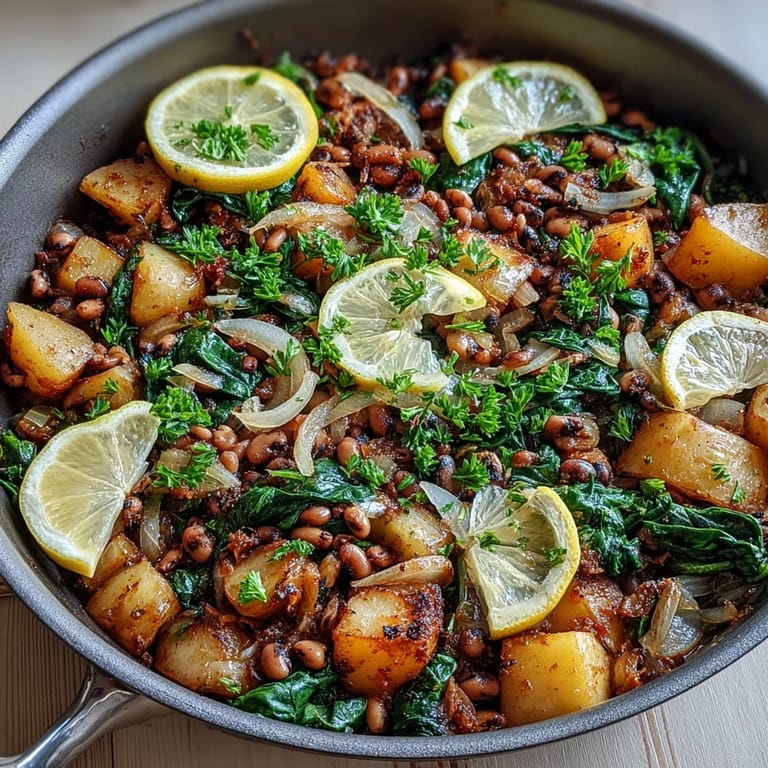
Save There's something about the sound of onions hitting hot oil in cast iron that pulls me into the kitchen on tired weeknights. My neighbor mentioned black-eyed peas one afternoon while we were both tending our front gardens, and I suddenly remembered my grandmother's kitchen in the South, where these little legumes meant luck and good fortune. That conversation sparked this skillet dinner, which became my go-to when I needed something hearty but didn't want to fuss with multiple pans. The beauty of it is how everything comes together in one place, building flavors as you go.
I made this for my sister when she was going through a phase of trying to eat more plant-based, and she kept sneaking extra spoonfuls straight from the skillet while I was plating. The way the spinach wilts right at the end, softening into the warm peas and potatoes—she said it felt like actual comfort food, not a compromise. That moment told me I'd gotten it right.
Ingredients
- Olive oil: Two tablespoons is enough to coat the pan and build a golden base for your vegetables without making anything greasy.
- Yellow onion: Slice it thin so it softens quickly and almost melts into the dish, sweetening everything as it cooks.
- Yukon Gold potatoes: These waxy potatoes hold their shape beautifully instead of turning to mush, and their buttery flavor is a gift here.
- Fresh spinach: Roughly chopped and added at the very end, it wilts in seconds and brings a peppery brightness that balances the earthiness.
- Black-eyed peas: Canned works perfectly fine if you drain and rinse them well, but cooking dried ones from scratch gives you more control over texture.
- Garlic: Three cloves minced fine, because you want them to disappear into the background and perfume everything subtly.
- Smoked paprika: This is the secret ingredient that makes people ask what you did differently; it adds a warm, almost smoky depth without actual smoke.
- Dried thyme: Half a teaspoon might seem small, but dried thyme is potent and herbaceous in a way that complements peas perfectly.
- Red pepper flakes: Optional, but a quarter teaspoon gives a gentle heat that creeps up on you warmly rather than shocking your palate.
- Vegetable broth: Half a cup is just enough to cook the potatoes through and let them absorb all the seasoning without turning soupy.
Tired of Takeout? 🥡
Get 10 meals you can make faster than delivery arrives. Seriously.
One email. No spam. Unsubscribe anytime.
Instructions
- Get Your Skillet Ready:
- Pour the olive oil into a large cast iron skillet and set it over medium heat. You'll know it's ready when it shimmers and moves easily around the pan.
- Caramelize the Onions:
- Add your sliced onion and let it sit for a minute before stirring, then sauté for 3 to 4 minutes until it turns translucent and begins to soften. You're building the flavor base here, so don't rush.
- Brown the Potatoes:
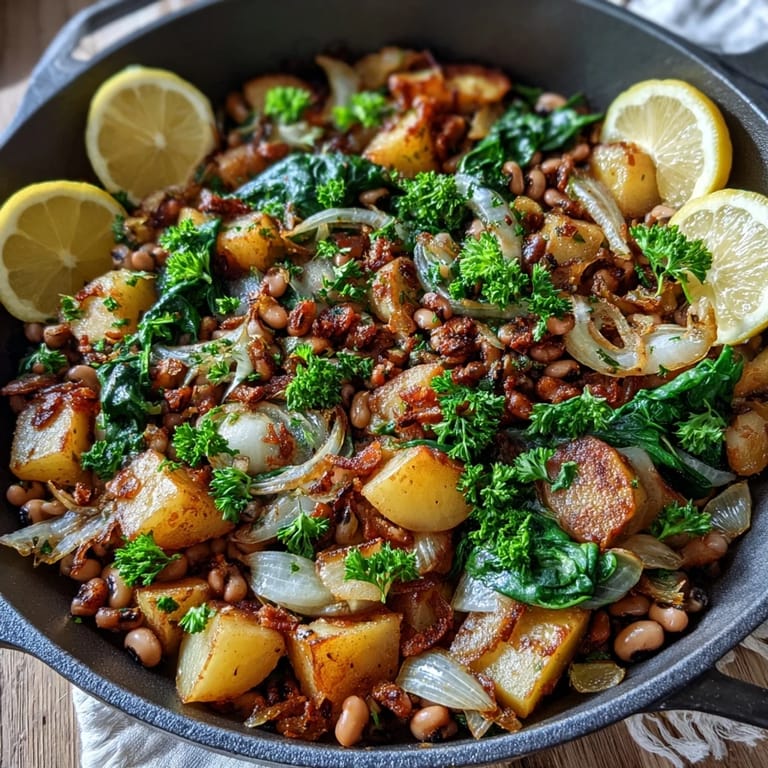
- Stir in your diced potatoes and let them cook for 10 to 12 minutes, stirring occasionally so they get golden on the edges. This step is where the magic happens—those crispy, browned edges against the soft centers are everything.
- Bloom Your Spices:
- Add the minced garlic, smoked paprika, thyme, and red pepper flakes, then cook for just 1 minute. You'll smell it immediately, and that fragrance tells you the spices are waking up.
- Simmer Everything Together:
- Pour in your vegetable broth and add the black-eyed peas, stirring to combine. Cover the skillet and let it simmer for 8 to 10 minutes until the potatoes are completely tender and the liquid mostly absorbed.
- Finish with Greens:
- Uncover the skillet, add your chopped spinach, and cook for 2 to 3 minutes, stirring gently, until it's completely wilted. The residual heat does the work here.
- Taste and Season:
- Take a spoonful, taste it carefully, and add salt and freshly ground black pepper to your preference. You might find you need less salt than you'd think because the broth already brings some.
- Serve Hot:
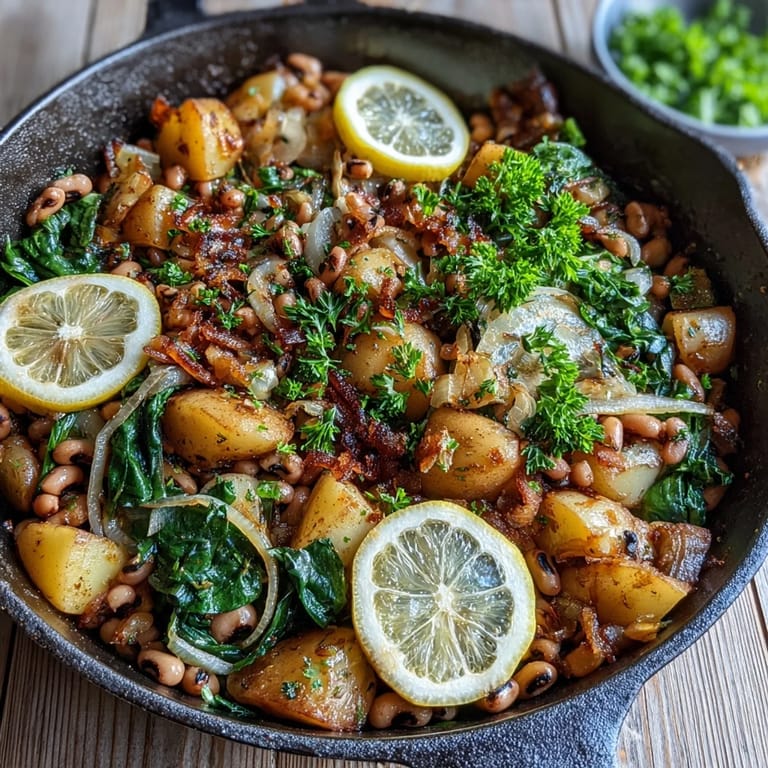
- Transfer to bowls or plates, top with fresh parsley if you have it, and squeeze a little lemon juice over each serving if you want to brighten everything up.
 Save
Save There was an evening when my kids actually asked for seconds of vegetables without any negotiation, and I realized this skillet dinner had somehow crossed from being food I made for myself into something that fed my whole family. That's when you know a recipe is worth keeping.
Cast Iron Is Your Friend Here
Cast iron holds heat beautifully and gives those potatoes a chance to brown properly, but it also looks lovely at the table. I often serve straight from the skillet, letting people scoop out their own portions, which feels less formal and more like sharing. If you don't have cast iron, a regular heavy-bottomed skillet or large sauté pan will work just as well—the cooking method stays the same.
Making It Your Own
This recipe is honestly a starting point rather than gospel, and I've made it differently almost every time I cook it. Sometimes I add diced bell peppers with the onions, or toss in a handful of cherry tomatoes at the very end for a bright pop. The vegetables that are sitting in your crisper drawer right now probably belong in here, and you should feel confident making that call.
Serving and Storing
This skillet dinner tastes wonderful hot right from the pan, but it's also excellent the next day eaten cold straight from the container or reheated gently on the stove. The flavors actually deepen overnight, which I've learned means it's perfect for meal prep if you're looking ahead to a busy week. Just store it in an airtight container in the refrigerator for up to four days.
- Pair it with cornbread for a classic Southern feeling, or serve alongside rice if you want something more filling.
- A squeeze of fresh lemon juice right before eating brightens the whole dish and cuts through the earthiness in the best way.
- Leftover portions reheat beautifully in a skillet over medium-low heat with a splash of water if they've dried out.
 Save
Save This dinner has become the kind of recipe I make when I want to feel grounded and take care of myself, or when I'm cooking for people I love and want them to feel that same care on their plate. There's honesty in a good skillet dinner.
Kitchen Tips & Answers
- → Can I use dried black-eyed peas instead of canned?
Yes, soak dried peas overnight and cook them separately until tender before adding to the skillet. You'll need about 1 cup dried peas to yield 2 cups cooked.
- → What other greens work well in this dish?
Kale, Swiss chard, or collard greens make excellent substitutes for spinach. Just adjust cooking time—heartier greens like kale may need a few extra minutes to soften.
- → How do I store and reheat leftovers?
Store in an airtight container in the refrigerator for up to 4 days. Reheat in a skillet over medium heat with a splash of broth or water, or microwave in 1-minute intervals until heated through.
- → Can I make this dish spicier?
Absolutely. Increase red pepper flakes to 1 teaspoon, add diced jalapeño with the onions, or stir in hot sauce at the end. Smoked paprika adds mild heat and depth.
- → What should I serve with this skillet dinner?
Cornbread, crusty bread, or steamed rice complement this dish beautifully. For a lighter meal, serve with a simple green salad dressed with vinaigrette.
- → Is this freezer-friendly?
Yes, cool completely and freeze in portion-sized containers for up to 3 months. Thaw overnight in the refrigerator before reheating. The potatoes may soften slightly after freezing.